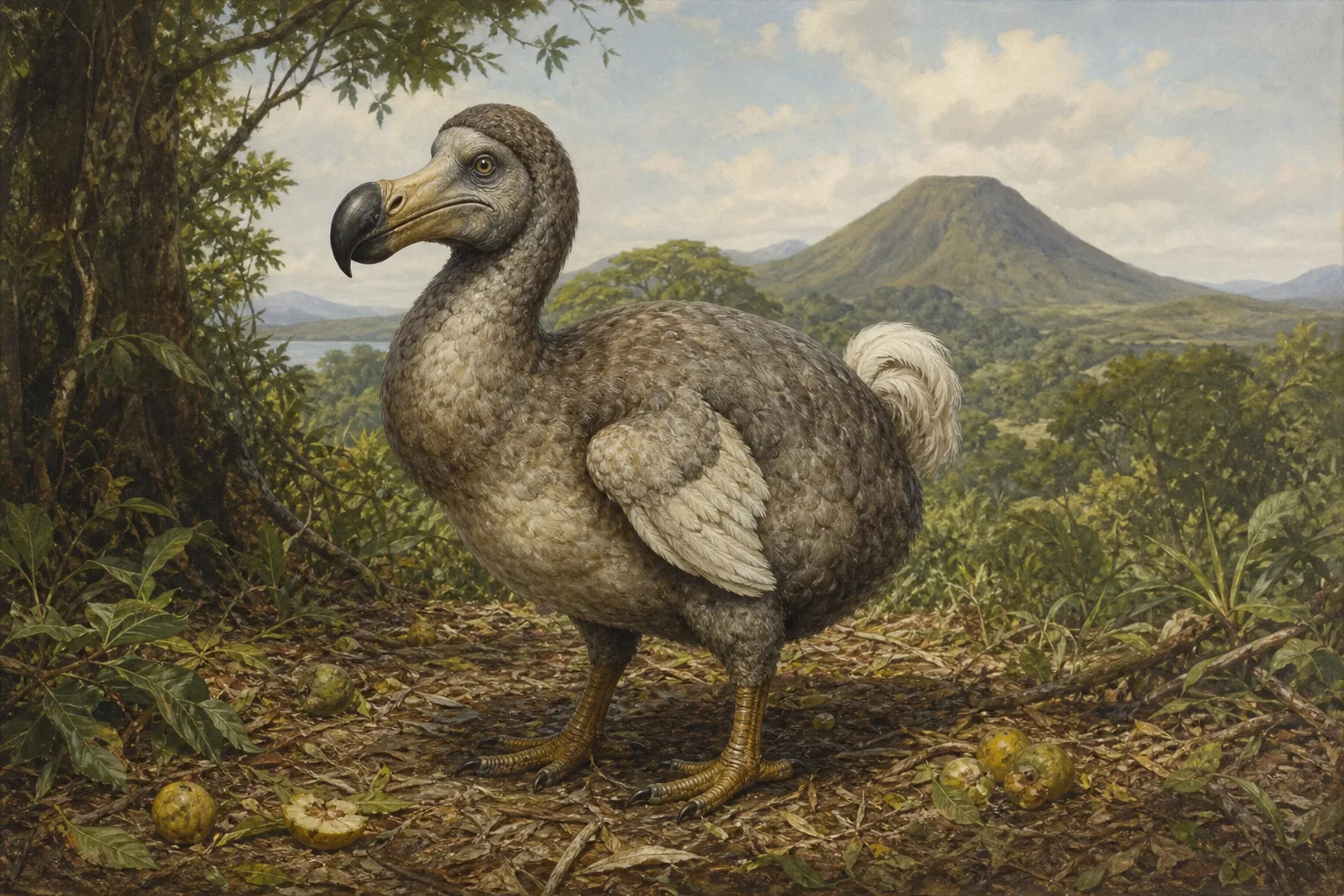
The dodo was a large, flightless bird, Raphus cucullatus, found nowhere naturally except Mauritius in the Indian Ocean. It is extinct: no living dodo population has been found, and modern knowledge of the bird comes from historical accounts, artworks, museum specimens, and subfossil remains. Source (accessed 2026-10-09)
What kind of bird was the dodo?
The dodo belonged to the pigeon lineage, despite looking very unlike the pigeons most people see today. Its scientific name is Raphus cucullatus; “dodo bird” is the familiar common name. It evolved on Mauritius, an isolated island east of Madagascar, where it became adapted to life on the ground rather than flight. Source (accessed 2026-10-09)
Calling it a “dodo bird” is technically repetitive—dodo already refers to the bird—but the phrase is widely used and clear. What matters more is avoiding the idea that it was a strange, failed version of a modern bird. The dodo was a distinct island species shaped by a particular environment that later changed rapidly. Source (accessed 2026-10-09)
Where did dodos live?
Dodos were endemic to Mauritius. They lived in the island’s forests and other lowland habitats, using a landscape that had developed without the same mix of large land predators and introduced mammals present after human settlement. Their tiny natural range meant that environmental disruption on one island could affect the entire species. Source (accessed 2026-10-09)
The dodo is often discussed alongside other island birds because island populations can be especially vulnerable when people, habitat change, and non-native animals arrive together. For a living example of a very different flightless island bird, see Kiwi Bird: Traits, Calls, Habitat, and Conservation.
What did a dodo really look like?
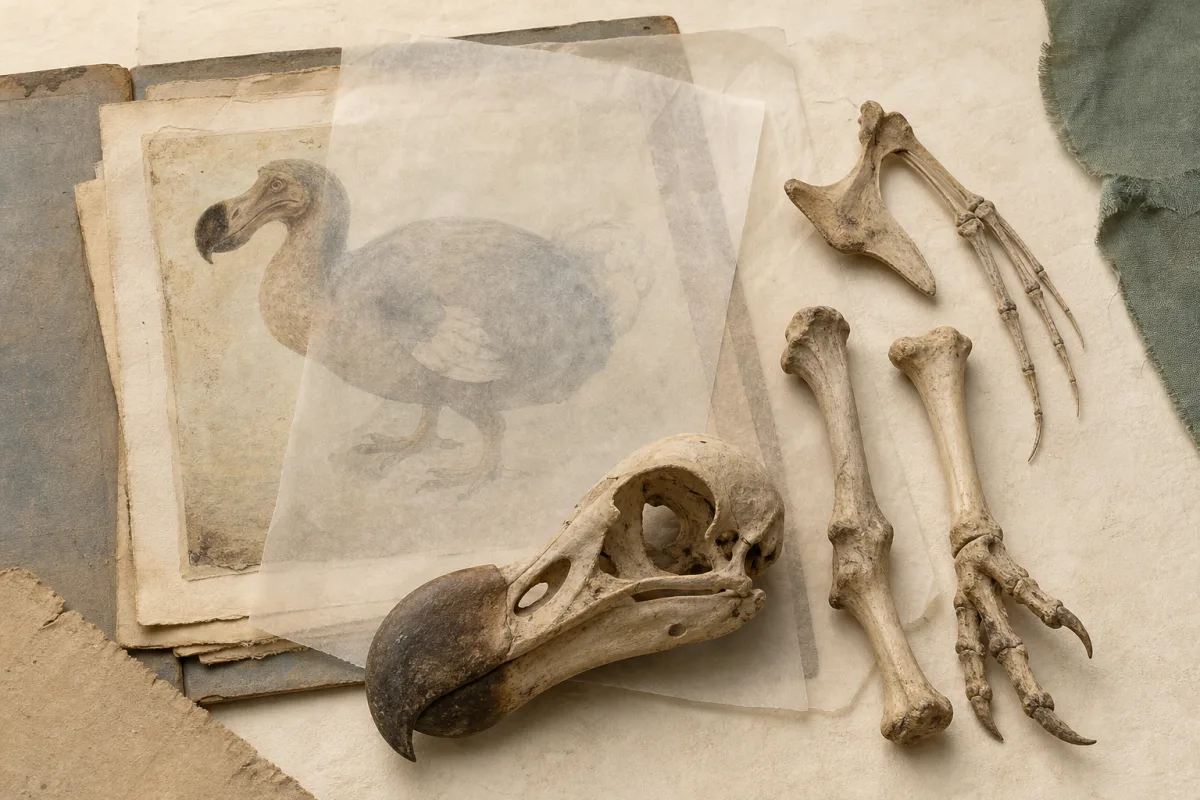
A reliable reconstruction starts with physical remains, not with one famous painting. Dodos had a robust body, short wings, sturdy legs, a large hooked bill, and a tail with curled feathers. Their exact coloring, posture, and usual body condition are less certain than many illustrations suggest, because historical images varied and some may have depicted captive birds that were unusually well fed. Source (accessed 2026-10-09)
The familiar round, awkward-looking dodo is therefore not the whole story. The Natural History Museum notes that evidence challenges the old caricature of a permanently slow and clumsy animal. A bird can lose flight on an island without being incapable of moving quickly on land. Source (accessed 2026-10-09)
What did dodos eat and how did they live?
Scientists infer much of dodo life from bones, historical notes, the island’s plants, and comparisons with related birds. The available evidence supports a ground-foraging bird that ate plant material such as fruits, seeds, and other foods available in Mauritius’s forests. Specific claims about a single favorite food should be treated cautiously: the popular story that dodos depended entirely on one tree is not a secure explanation for their extinction. Source (accessed 2026-10-09)
Its flightlessness was an adaptation, not proof of weakness. Short wings could no longer provide flight, while strong legs supported a terrestrial way of life. Details such as nesting behavior, calls, and everyday movement are harder to recover because no observer recorded the complete life history of a wild dodo. Source (accessed 2026-10-09)
When did the dodo disappear?
-
European sailors encountered Mauritius and recorded dodos in 1598. Early descriptions, drawings, and transported specimens became part of the limited historical record. Source (accessed 2026-10-09)
-
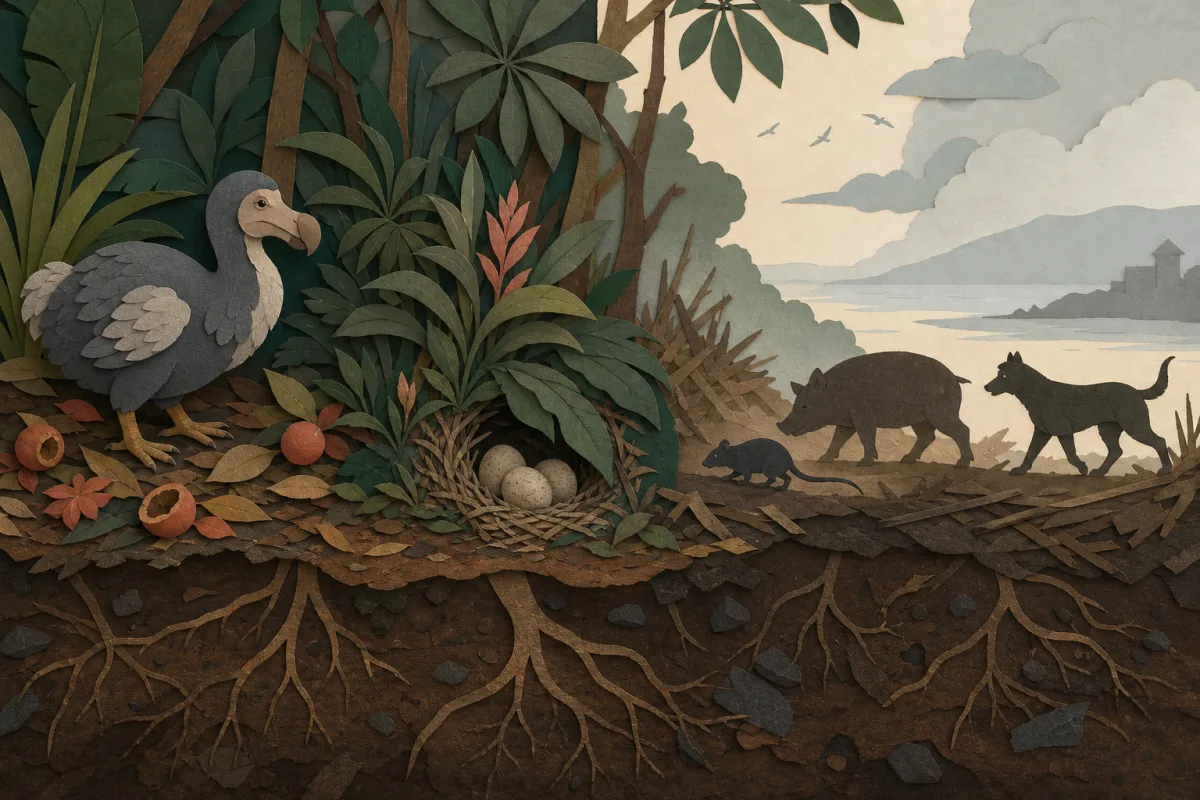
As human activity on Mauritius increased, dodos faced hunting, habitat disruption, and animals introduced by people. Eggs and ground nests were likely especially exposed to pigs, rats, dogs, and other newcomers. Source (accessed 2026-10-09)
-
A sighting in 1662 is commonly cited as the last recorded observation. That is not the same as knowing the precise day the final individual died; a species can persist unnoticed after its last accepted report. Source (accessed 2026-10-09)
Why did dodos become extinct?
There is no evidence that one person killed “the last dodo.” Extinction was a process driven by interacting pressures: people hunted dodos, altered habitat, and brought animals that could prey on eggs or compete for food. Reducing this history to hunting alone misses the wider ecological change that followed human arrival on Mauritius. Source (accessed 2026-10-09)
The dodo was not extinct because it was inherently foolish. The “dumb bird” label grew from later cultural portrayals and from accounts written by visitors who encountered an animal unfamiliar with humans and newly introduced predators. The evidence supports a bird poorly equipped for abrupt changes to its island ecosystem, not a species that deserved its fate. Source (accessed 2026-10-09)
Common dodo questions, answered
Has a dodo been found alive?
No verified living dodo has been found. The species is treated as extinct, and claims of a living dodo do not override the historical and scientific record. Source (accessed 2026-10-09)
Is there a real last photograph of a dodo?
No known photograph shows a living dodo. Images presented as a “last photo” are typically historical artwork, images of preserved material, or modern reconstructions—not a photograph of the final bird. Source (accessed 2026-10-09)
What did a dodo sound like?
No verified recording of a dodo exists, so its calls are unknown. Any sound used in documentaries, games, or online videos is an interpretation rather than an authentic dodo recording. Source (accessed 2026-10-09)
Why the dodo still matters
The dodo became a lasting symbol of human-caused extinction because its disappearance followed soon after people reached and transformed its island home. Its story is a reminder that extinction can be caused by combined pressures, including habitat loss and introduced species, rather than one dramatic event. Source (accessed 2026-10-09)
For birds alive today, sound and photographs can provide useful starting clues, but an identification should still consider location, habitat, date, and visible field marks. Explore how to identify bird species by sound and photo, listen more carefully with the app for bird sounds, or use the Bird Sound Identifier. Orniqa’s App Store listing describes the product as bird identification by sound and photo. Source (accessed 2026-10-09)
For more field-focused reading, visit the Bird Identification Journal or learn practical ways to investigate unfamiliar local calls in Birds Near Me: How to Figure Out What You’re Hearing.