Bird Identification Guide
App for Bird Sounds: Find the Bird Behind the Call
Learn how an app for bird sounds helps you narrow bird ID by audio, photos, and field clues with practical tips and a quick checklist.
If you need an app for bird sounds, the best one is the one that helps you narrow a bird down quickly from what you hear, what you see, and where you are standing. Orniqa is built for that kind of real-world birding: use the bird sound and photo identifier to compare field clues, then confirm your best match instead of guessing from one noisy call.
What an app for bird sounds should do well
Bird sounds can be short, layered, and hard to separate from wind, traffic, or other birds. A useful identification app should make the process calmer, not more confusing. It should help you sort by sound pattern, nearby habitat, and visual details without pretending every chirp can be labeled with total certainty.
Look for these practical features:
- Sound-based narrowing that helps separate songs, calls, and repeated notes
- Photo support so you can compare the bird you saw with the bird you heard
- Fast decision support for common backyard and park species
- Simple comparisons when two birds sound similar
- Clear next steps when the result is uncertain
That mix matters because many bird ID mistakes happen when people rely on one clue alone. A shape in the branches, a flash of color, or a single call note can point you in the right direction, but usually not all the way to a confident answer.
How to identify a bird by sound and photo
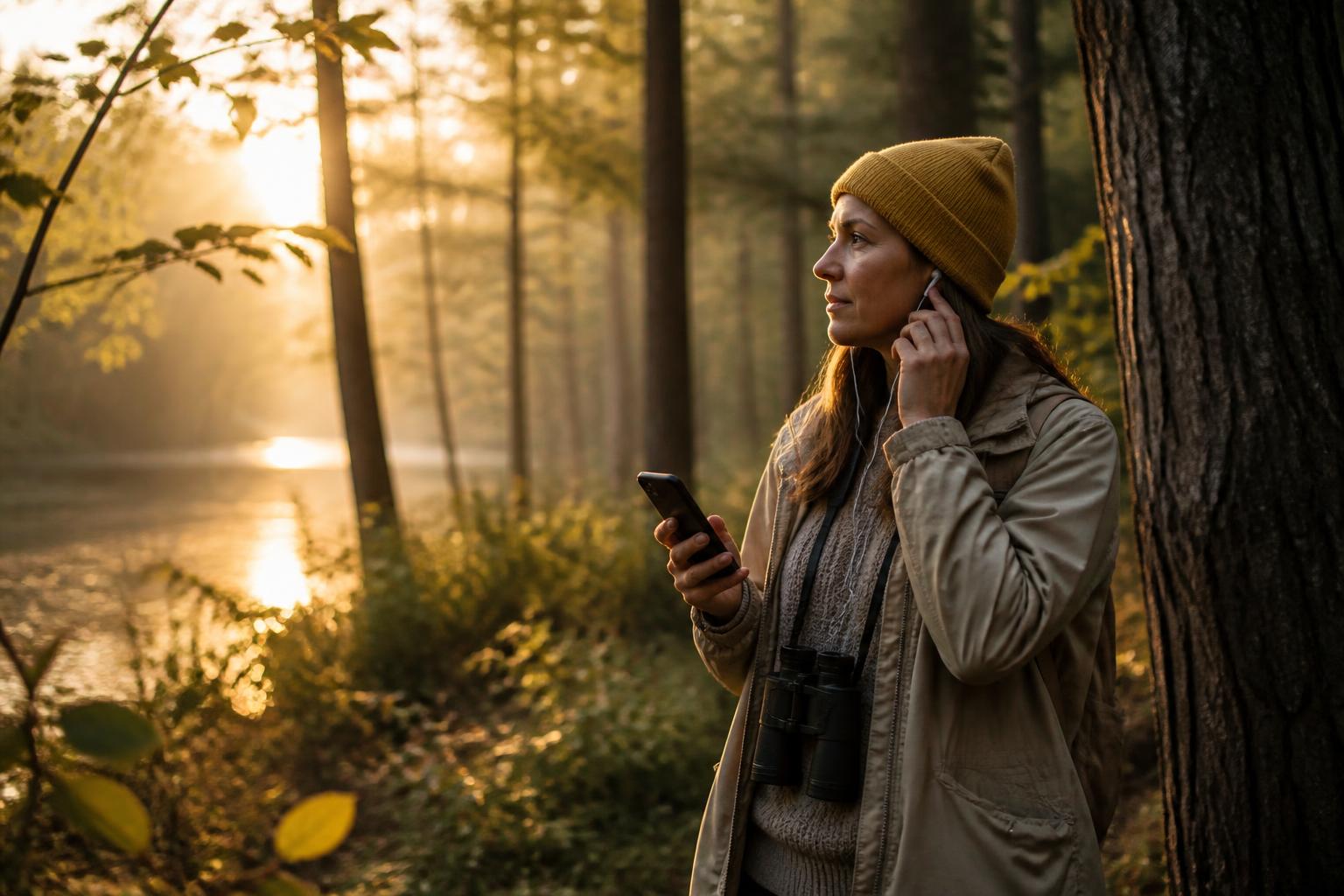
The easiest way to use a bird sound app is to treat it like a field notebook, not a magic answer machine. Start with the sound, then add what you saw, then confirm with the setting around you. If you want a step-by-step walkthrough, Orniqa also has How to Identify This Bird by Sound and Photo and Bird Species Identifier: How to Narrow It Down by Sound and Photo.
A simple three-step path
- Listen for the pattern. Is it one sharp note, a repeated call, a rising song, or a quick chatter?
- Check the bird’s outline. Notice size, tail length, bill shape, and whether it moves like a sparrow, woodpecker, thrush, or warbler.
- Match the place and behavior. Is the bird in brush, water, open lawn, a feeder, or high tree canopy?
When those three pieces point the same way, you usually have a stronger lead than from sound alone.
Field clues that make sound ID easier
A bird sound is easier to interpret when you pay attention to the scene around it. A call from a shaded backyard hedge may suggest a very different set of possibilities than the same sound in a marsh edge or pine stand. If you are trying to figure out what you are hearing close to home, Birds Near Me: How to Figure Out What You’re Hearing can help you think through local context.
| Clue | What to notice | Why it helps |
|---|---|---|
| Sound pattern | Repeats, pauses, pitch changes, harsh vs. clear notes | Separates similar birds that look alike but sound different |
| Perch height | Ground, low shrubs, mid-level branches, tree canopy | Many birds use distinct layers of habitat |
| Bill shape | Short and conical, thin and pointed, long and straight | Useful when the body is partly hidden |
| Behavior | Hopping, crawling, hovering, pecking, flitting | Often more distinctive than color in bad light |
| Nearby habitat | Water, woods, feeder, meadow, brush, suburban yard | Helps narrow what species are likely in the area |
When photo clues help more than the call
Some birds are noisy but visually plain, and some are quiet but easy to identify by shape. A good app for bird sounds should also handle photo-based comparison, especially when the bird is visible for only a few seconds. If you saw the bird first and heard it second, the photo may be the stronger clue.
Use photo details like these:
- Overall shape: compact, slender, upright, long-tailed, or stocky
- Bill style: seed-cracking, probing, spear-like, or fine and thin
- Wing and tail contrast: plain, patterned, barred, or tipped
- Posture: perched upright, foraging on the ground, climbing trunks, or hanging upside down
- Behavior in motion: quick bursts, steady hopping, or short flights between cover
If you want a focused workflow for this kind of mixed evidence, the guide How to Identify Bird Species by Sound and Photo is designed for that exact task.
Warning signs that your first guess may be wrong
Bird identification is usually better when it is cautious. A few common signs can tell you to slow down and compare again.
- The call sounds familiar, but the habitat does not fit.
- The bird’s shape matches one group, but the behavior matches another.
- You heard more than one bird at once and may be mixing signals.
- Low light, distance, or wind made the sound hard to judge.
- The bird was only visible for a moment, from a poor angle.
When any of those happen, it helps to treat the result as a best match, not a final verdict. That approach is more useful in the field and more honest for learning.
Quick comparison: sound-only vs sound plus photo
| Method | Best for | Watch out for |
|---|---|---|
| Sound only | Birds hidden in brush, trees, or distant cover | Similar calls, background noise, and overlapping birds |
| Photo only | Clear views of posture, bill, and body shape | Lighting, blur, and brief sightings |
| Sound + photo | Most everyday bird ID situations | Still needs habitat and behavior for confirmation |
For many readers, sound plus photo is the most practical route because it reduces false confidence. It is often the difference between “that might be it” and “that is the best fit I can support with evidence.”
A field checklist you can use on your next walk
Before you leave a trail, yard, or park bench, keep this short checklist in mind:
- What did the bird sound like: song, call, chatter, whistle, or harsh note?
- Did the sound repeat in a pattern?
- Was the bird high in the trees, low in brush, on the ground, or near water?
- What was the bill shape and overall body shape?
- Did the bird fly, hop, creep, cling, or hover?
- Did one clue contradict another?
Writing down even two or three of these details can make later identification much easier. If you keep a record of observations, Orniqa’s Bird Identification Journal can be a useful place to continue learning over time.
Why local bird context matters
A bird sound app works best when it is used with local awareness. Birds near a feeder, wetland, woodland edge, or suburban street can differ from one neighborhood to the next. Seasonal movement also changes what you are likely to hear, so a bird that seems unexpected may simply be passing through.
That is why a good identification habit is to ask three questions: What did I hear? What did I see? What is likely here right now? The answer is usually stronger when all three align.
Try Orniqa when you want a calmer way to narrow the bird
Orniqa is designed for birders who want a straightforward way to compare sound and photo clues without overcomplicating the moment. If you are listening in the yard, on a trail, or near a local park, the app can help you move from uncertainty to a sensible shortlist.
Get Orniqa on the App Store and use it as your bird sound and photo identifier on the next walk.
FAQ
Can an app identify a bird from sound alone?
Sometimes it can narrow the possibilities, but sound alone is not always enough for a confident ID. The strongest results usually come from combining sound with a photo, the bird’s shape, and the habitat around you.
What if I only heard one short call?
One short call can still be useful, especially if you note where you heard it and what the bird was doing. Try to record the pattern, not just the moment. A short note, repeated call, or sharp whistle can all point in different directions depending on context.
Should I trust the first result I get?
Use the first result as a starting point, not the final word. Compare it with the bird’s size, bill, behavior, and location. If one clue does not fit, keep the result as a hypothesis and look again.
What is the best way to improve bird sound ID skills?
Listen often, write down what you notice, and compare multiple birds that sound similar. Over time, the repeated patterns become easier to separate. Using a bird sound and photo identifier can speed up that learning process.
Final take
If you are looking for an app for bird sounds, choose one that helps you think like a field naturalist: listen closely, compare carefully, and confirm with more than one clue. That approach is calmer, more accurate, and more useful when the bird is only a flicker in the branches or a note in the trees.
Best results come from sound plus sight plus setting — not from a single clue taken in isolation.
CTA: Try the Orniqa bird sound and photo identifier, then turn a confusing call into a clear next step.
Try the Orniqa app
Use the app when you want a faster, more organized starting point before comparing details manually.